 A new perspective on wine.
 Meet the people behind the wines.
 Japan, beyond the familiar.
 Stories from Japan.


Yamanashi · Katsunuma-Shimoiwasaki
Iwasaki
Honjyo. Koshu with roots in a growers’ community.
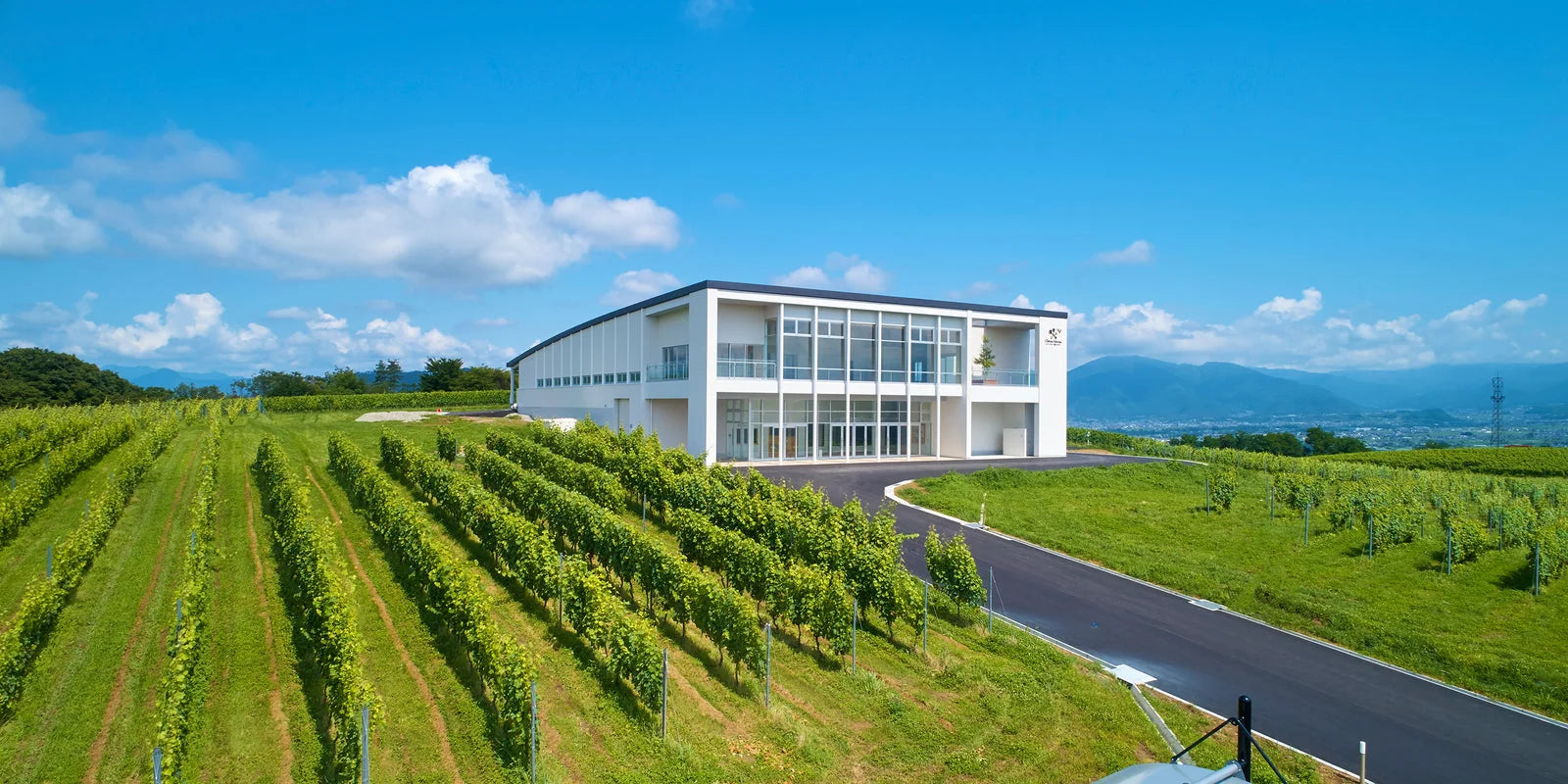
Iwasaki is deeply rooted in Katsunuma. Behind the familiar Honjyo name stands a winery founded through local cooperation, exploring Yamanashi’s diversity through understated Koshu, skin-contact winemaking and Japanese red grape varieties.
- Origin
- Katsunuma-Shimoiwasaki, Yamanashi
- Founded
- 1941
- Also known as
- Honjyo Wine
- Key white variety
- Koshu
- Further discoveries
- Muscat Bailey A · Kai Noir
130 growers and a shared idea
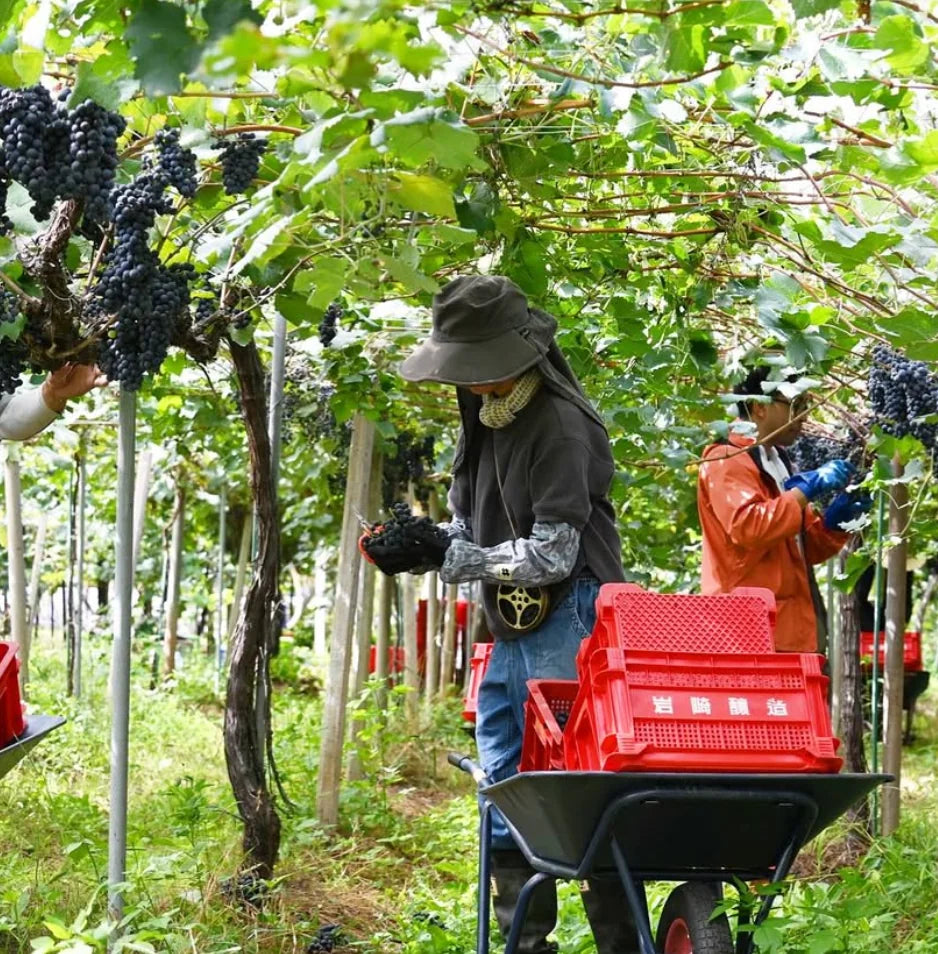
In 1941, 130 local grape growers joined together to establish Iwasaki Jōzō in the village then known as Iwai, now Katsunuma-Shimoiwasaki. Their initiative connected work in the vineyards with a shared facility for processing grapes and making wine.
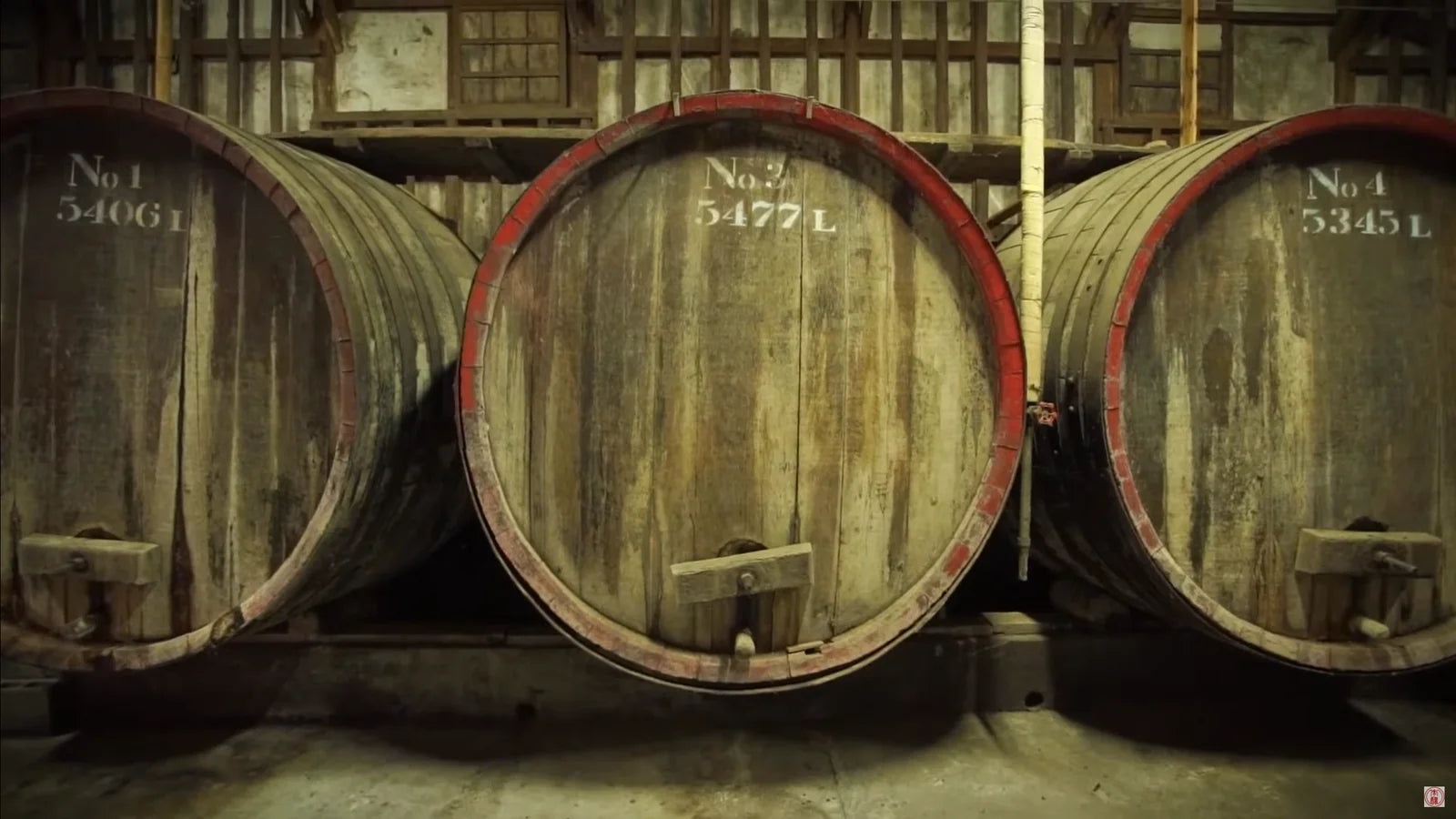
Honjyo became the winery’s familiar name, derived from an expression conveying authentic or serious winemaking. This local connection remains central to its identity. A large wooden cask and a traditional storehouse with earthen walls form part of the winery’s historic setting and can be seen during a visit.
Estate vineyards and a community of growers
The structure of Iwasaki’s range reveals much about the winery. It distinguishes wines from its own vineyards, established bottlings made with grapes from shareholder growers, and special vinifications. Cooperation with local families can therefore be traced through the choice of bottles.
The estate-grown category includes Koshu, Chardonnay and Kai Noir, while the established range features dry Koshu and Muscat Bailey A. This is a useful starting point for discovering Iwasaki: it connects the origin of the grapes with the winemaking idea behind each bottle.
Koshu: one variety, different textures
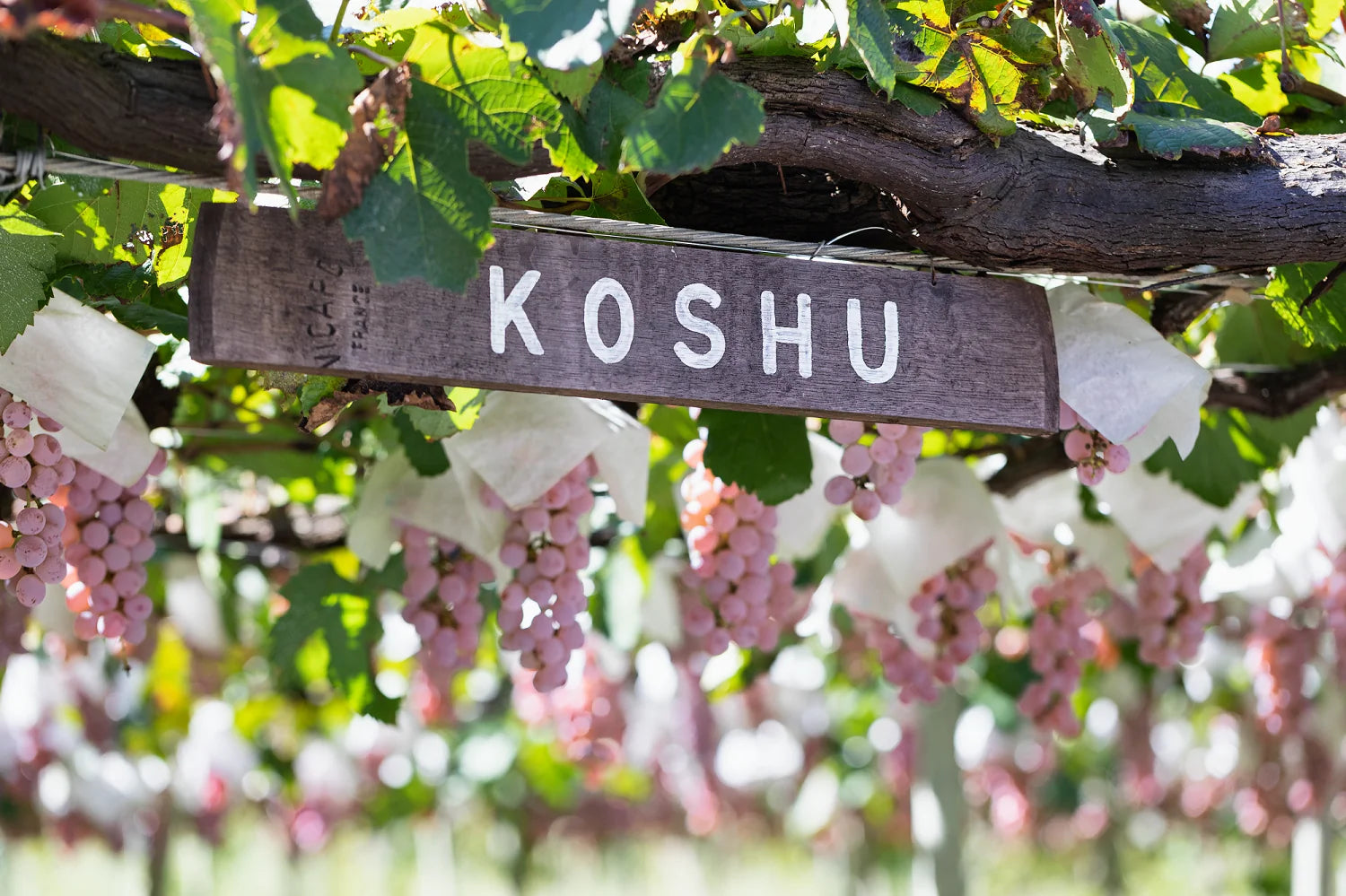
Koshu provides a particularly revealing range of styles. Iwasaki describes the variety through delicate citrus notes and an understated, elegant character. Its range also shows how maturation can change the experience: there is Koshu aged in large wooden casks, a barrel-fermented version and sparkling wine.
The winery emphasises a gentle, rounder character in its large-cask Koshu. Comparing different expressions invites attention to more than aroma: the flow across the palate, the relationship between freshness and body, and the impression that remains after each sip.
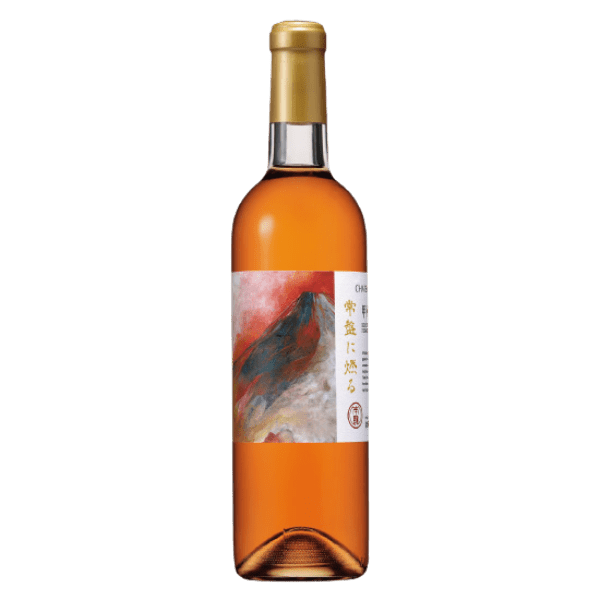
Tokiwa ni moyuru: Koshu with skin contact
Tokiwa ni moyuru takes another direction. Iwasaki explicitly calls it Koshu Maceration and places it within its orange-wine range. In this style of winemaking, white grape skins remain in contact with the must during fermentation, potentially producing deeper colour and perceptible tannins.
Texture therefore becomes especially interesting when tasting. Notice the grip on the palate and allow the wine time in the glass. Comparing it with a conventionally vinified Koshu offers a particularly clear way to explore how differently the same variety can be interpreted.
Yamanashi’s red varieties
Muscat Bailey A adds a red variety bred in Japan. Iwasaki emphasises its fruity, relatively light character and uses careful extraction to develop depth. The different barrel and maturation styles in the range show the variety’s capacity for several expressions.
The winery also works with Kai Noir, a crossing of Black Queen and Cabernet Sauvignon. The producer identifies late ripening and pronounced acidity as important characteristics. For curious wine drinkers, this opens another route alongside Koshu: exploring the red varieties and crossings that help shape Yamanashi’s wine landscape.
Wines from Iwasaki
岩崎 - Iwasaki
Tokiwa-ni-moyuru Koshu 2022
€57,00
Taxes included. Shipping policy
