 A new perspective on wine.
 Meet the people behind the wines.
 Japan, beyond the familiar.
 Stories from Japan.


02 · Winegrowing in Japan
How Japan became a wine country
The Meiji era: learning, experimenting, building
Yamanashi’s May 2026 publication dates early Kōfu winemaking by Yamada Hironori and Takuma Norihisa to 1874, correcting older accounts that gave 1870–71. It cites newspaper and archival evidence for the revision.
After the Meiji Restoration, the government encouraged new industries and the introduction of foreign knowledge. In this context, the Dai-Nihon Yamanashi Budōshu Kaisha was founded in Katsunuma in 1877 and is considered Japan’s first private wine company. It sent Takano Masanari and Tsuchiya Ryūken to France to learn grape growing and winemaking. Production began after their return in 1879. Technical difficulties and an undeveloped market put pressure on the company, which dissolved in 1886. Miyazaki Kōtarō and Tsuchiya continued the work with the inherited facilities.
Later development was not a straightforward success story of one winery. Katsunuma developed a network of growers, wineries and merchants. Marufuji’s family history, associated with Rubaiyat, illustrates these links: Ōmura Chūbei helped finance the company in 1877; his son Jisaku began making wine in 1882 and obtained an official production licence in 1890. These different dates explain why a winery may distinguish between family roots, the start of production and formal establishment.
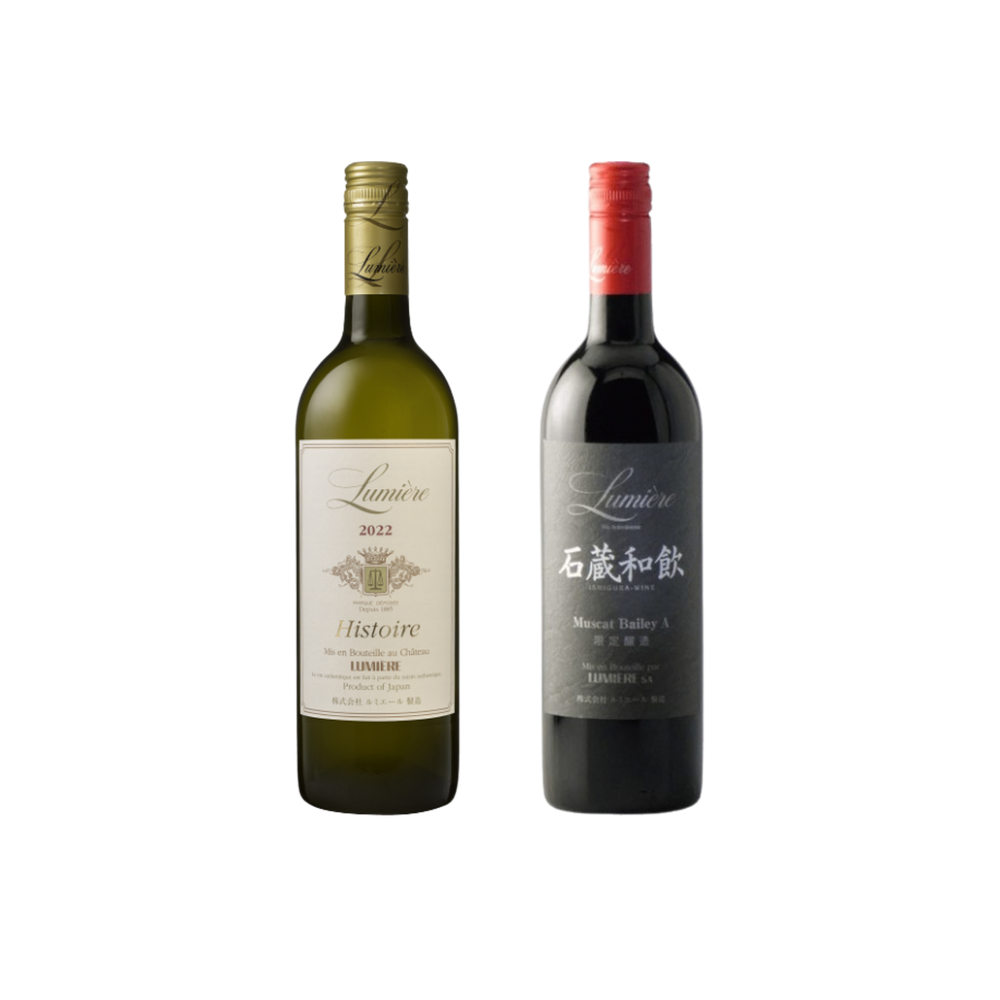
Buildings preserve another side of this history. Lumière’s underground granite fermentation vessels were constructed in 1901 under Kamiya Denbei’s guidance. Ushiku’s large winery was completed in 1903, bringing grape growing, production, storage and bottling into an integrated operation.
Sweetened and aromatised wine products also helped develop a market. Their place in nineteenth-century drinking culture should be understood on its own terms: the modern legal category Japan Wine cannot simply be applied to every historical product called wine.
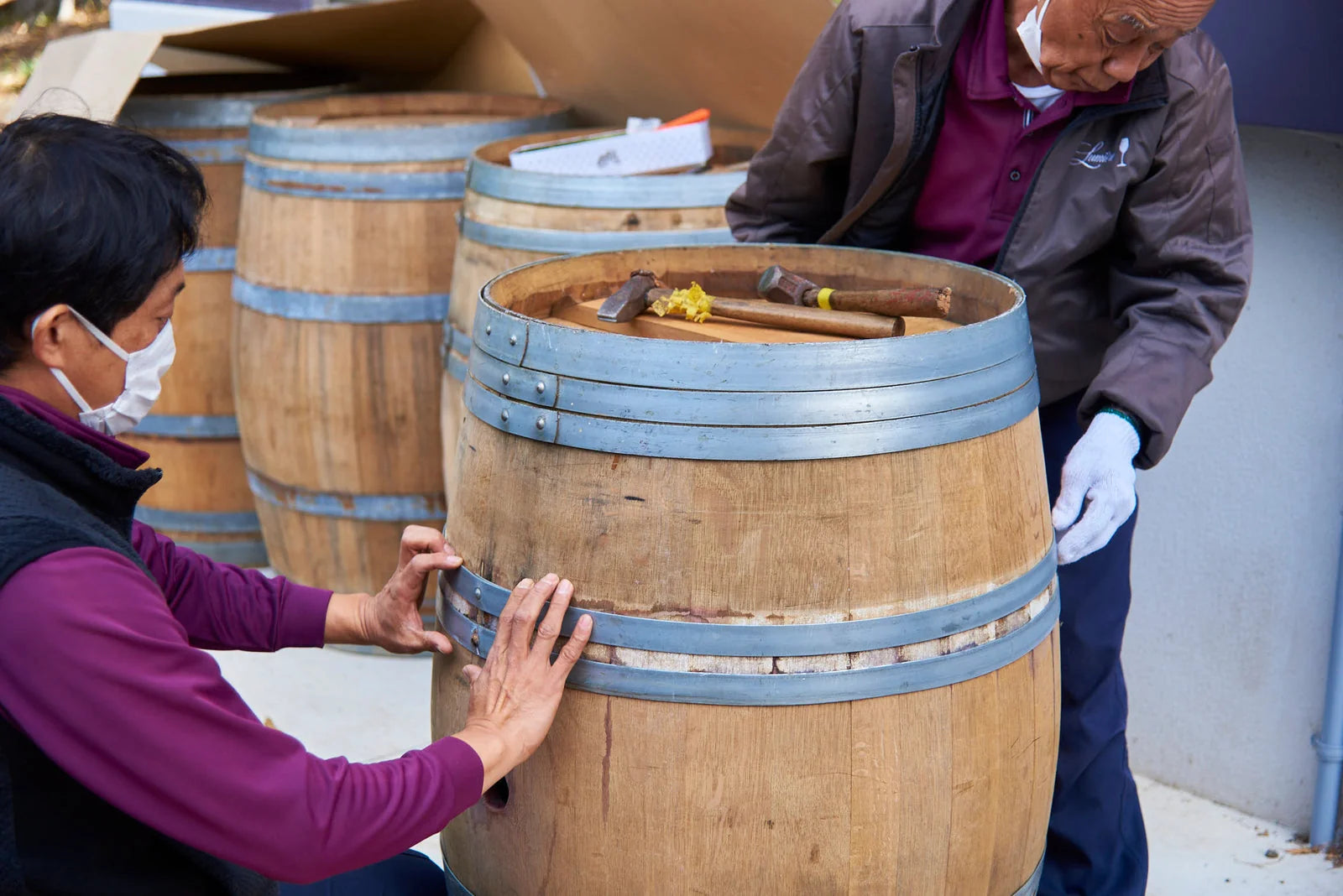
New techniques, a new view of origin
Later developments can be traced through specific changes. Marufuji records the purchase of French grape-processing machinery in 1966 and a cooled cellar in 1973. Such investments show that wine quality also has a history of processing and storage. It does not depend solely on the grape variety named on the label.
From 1970, Mercian investigated the relationship between sites and varieties, including Merlot in Kikyōgahara and Chardonnay in Hokushin. International grapes became part of the same search for suitable local growing conditions.
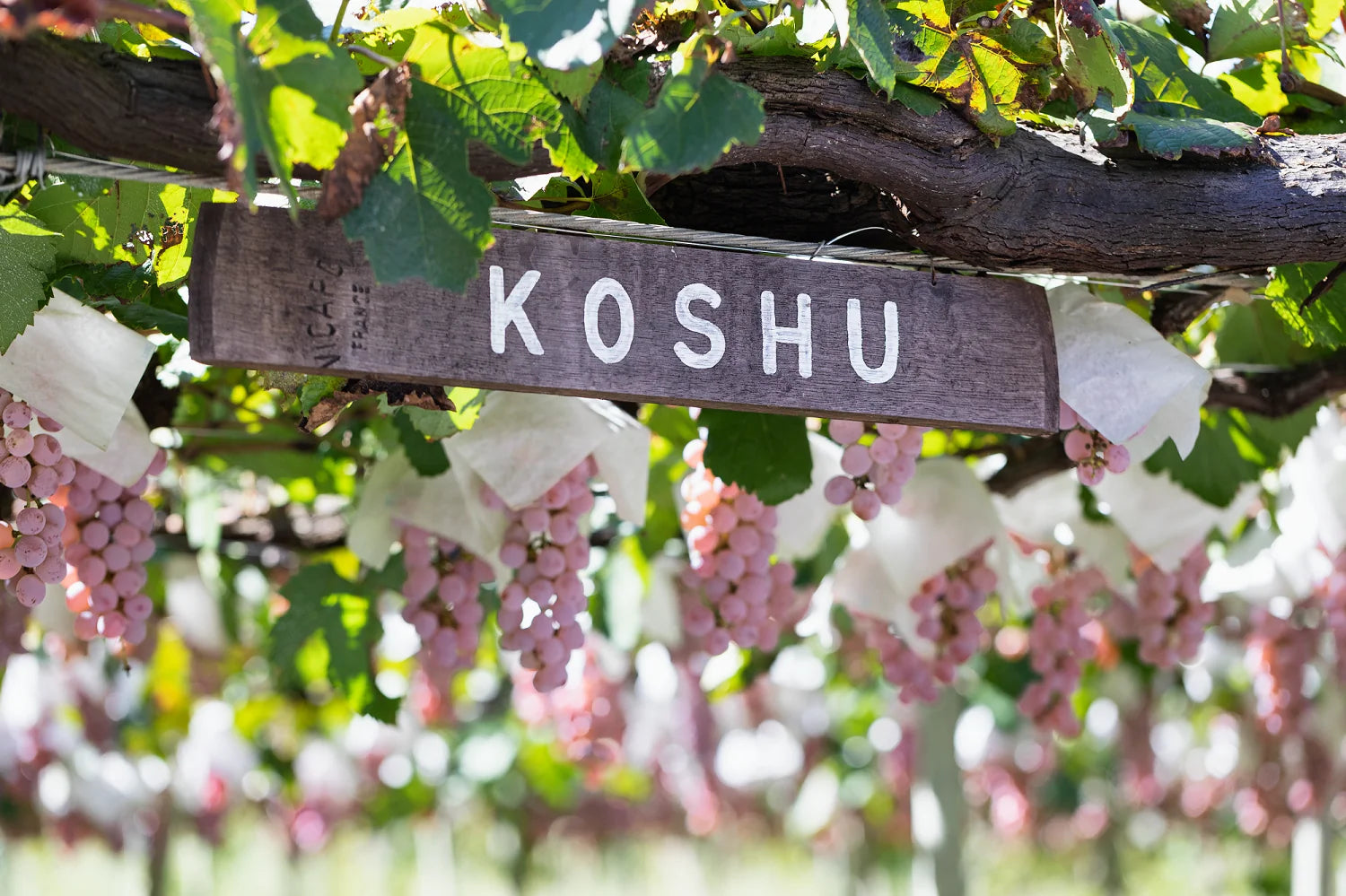
For Kōshū, sur-lie ageing, which keeps wine in contact with its lees, was an important development. Mercian adopted the approach in 1983 and released the wine in 1984. Yamanashi’s official chronology connects this period with a move towards dry styles suited to meals. The two dates describe production and release respectively.
Skin contact and aroma research subsequently broadened the possibilities. Mercian’s chronology lists Kōshū Gris de Gris in 2003; collaboration with Denis Dubourdieu’s Bordeaux research team contributed to the citrus-led Kiiroka style. These developments explored qualities already present in the grape.
Kōshū joined the OIV’s international variety list in 2010, followed by Muscat Bailey A in 2013. Listing identifies a grape variety; it does not award quality status to individual wines. Nor should it be described as the first permission to sell those wines in the EU.
The key milestones
- 1874Early Kōfu production, following Yamanashi’s revised dating.
- 1877Private wine company founded; Takano and Tsuchiya travel to France.
- 1879 / 1886Production begins; company later dissolves and successors continue.
- 1890Iwanohara founded.
- 1901 / 1903Lumière’s stone vessels; Ushiku winery completed.
- 1927Muscat Bailey A cross made.
- 1983 / 1984Kōshū sur-lie production and subsequent release.
- 2010 / 2013Kōshū and Muscat Bailey A enter the OIV list.
- 2013Yamanashi wine GI designated.
- 2015 / 2018Labelling rules announced and subsequently applied.
Sources & further reading · Japanese original sources
- “ワイン県やまなし”日本ワイン発祥の地 — 山梨県
- 日本を世界の銘醸地に 地域とともに歩むシャトー・メルシャンの挑戦 — キリン
- ワイナリーの歴史 — 丸藤葡萄酒工業
- 100年の歳月に耐えられるワインを目指す、石蔵和飲。 — ルミエール
- 日本ワイン140年史~国産ブドウで醸造する和文化の結晶~ — 文化庁
- フィロソフィ — シャトー・メルシャン
- 甲州ワインの歴史とこれから — 山梨県公式観光情報
- 甲州の挑戦と多様性 — Château Mercian Online
- お酒のはなし ワイン2(日本ワイン) — 酒類総合研究所
- 葡萄園について — 岩の原葡萄園
- 善兵衛のぶどう — 岩の原葡萄園
- 酒類の地理的表示一覧 — 国税庁
- 果実酒等の製法品質表示基準を定める件 — 国税庁
