 A new perspective on wine.
 Meet the people behind the wines.
 Japan, beyond the familiar.
 Stories from Japan.


04 · Winegrowing in Japan
Grape varieties with a story of their own
“Japanese grape” can mean a traditional cultivated variety or a modern cross bred in Japan. “Autochthonous” does not describe all of them accurately. International grapes grown in Japan belong to this wine culture too.
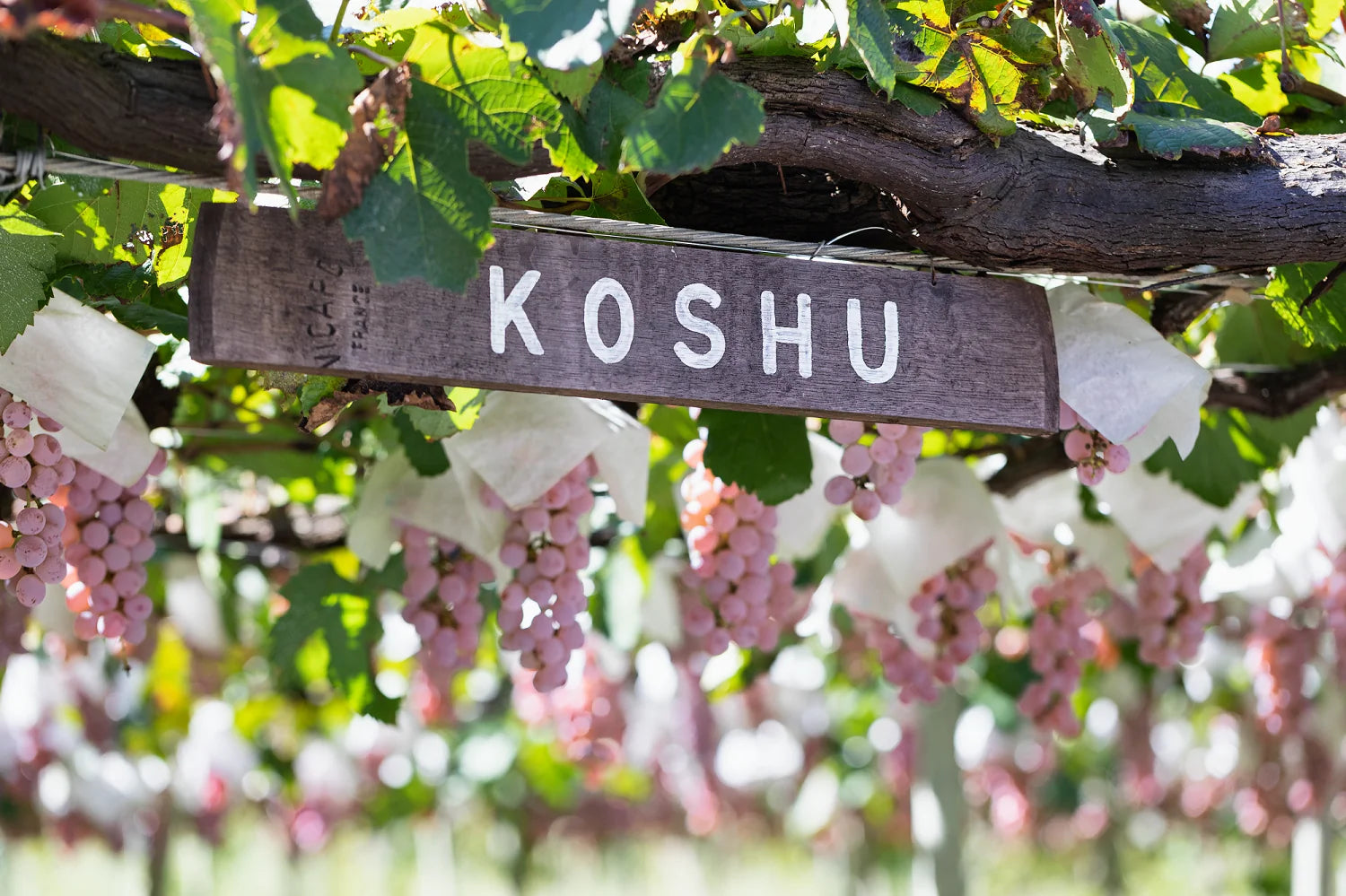
Kōshū: an old cultivated grape with complex ancestry
Yamanashi preserves stories linking Kōshū to the monk Gyōki in 718 and Amemiya Kageyu in 1186. The prefecture explicitly calls these legends. They form part of regional culture, rather than proving the grape’s arrival date.
NRIB research identifies predominantly Vitis vinifera ancestry alongside East Asian wild-vine ancestry. Kōshū’s examined chloroplast DNA closely matches a southern Chinese Vitis davidii lineage; as the simplest explanatory model, the researchers propose a cross with an East Asian wild vine followed by a further cross with Vitis vinifera.
Kōshū is therefore a traditional Japanese cultivated variety closely associated with Yamanashi, with complex ancestry. “Native” does not mean all its ancestors were Japanese wild vines. Nor is it genetically unmixed European. Its Asian background and precise route to Japan should not be confused with a fully documented historical chronology. DNA does not establish a definite year of arrival.
A grape can become deeply rooted in a place through a long history of cultivation and adaptation. Cultural belonging and botanical ancestry answer different questions.
Kawakami Zenbei and the deliberate breeding of Muscat Bailey A
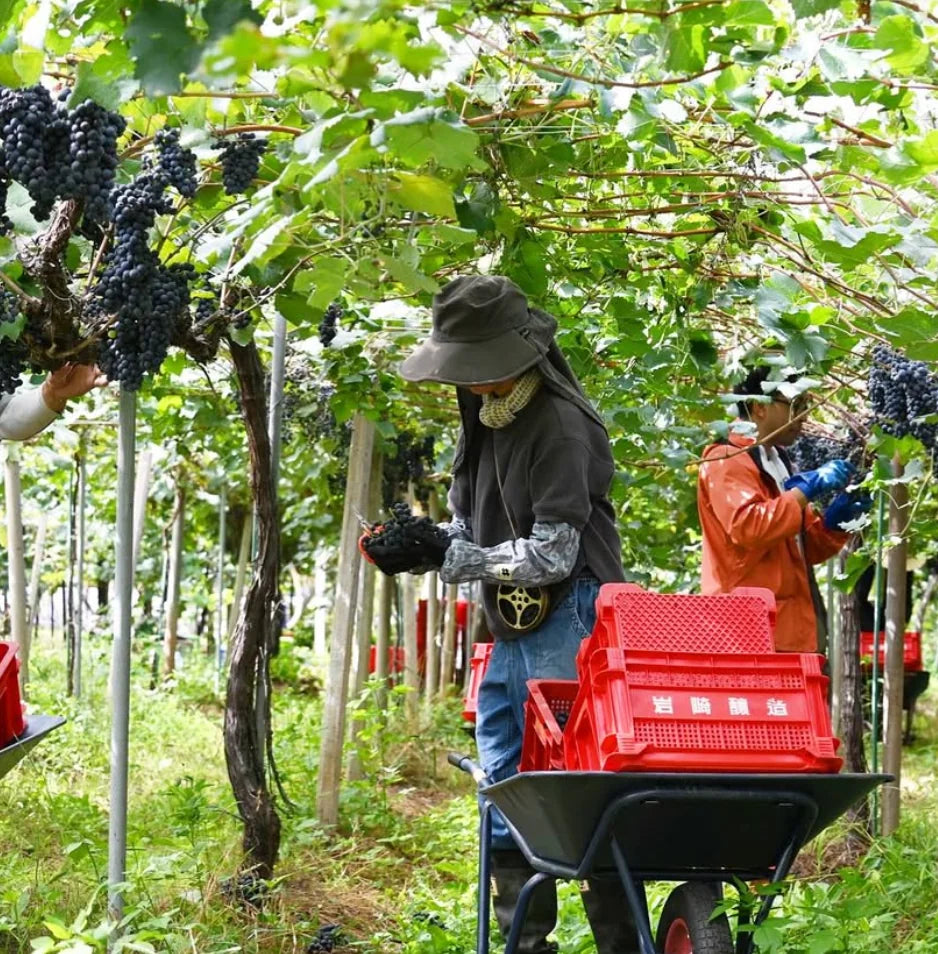
A second major line of development leads to Niigata. Kawakami Zenbei founded Iwanohara there in 1890. According to the winery, he linked winegrowing with a desire to create new economic opportunities for his home region, shaped by snow and difficult harvests. Imported vines alone did not solve local problems. From 1922, he therefore focused on breeding varieties better suited to local conditions.
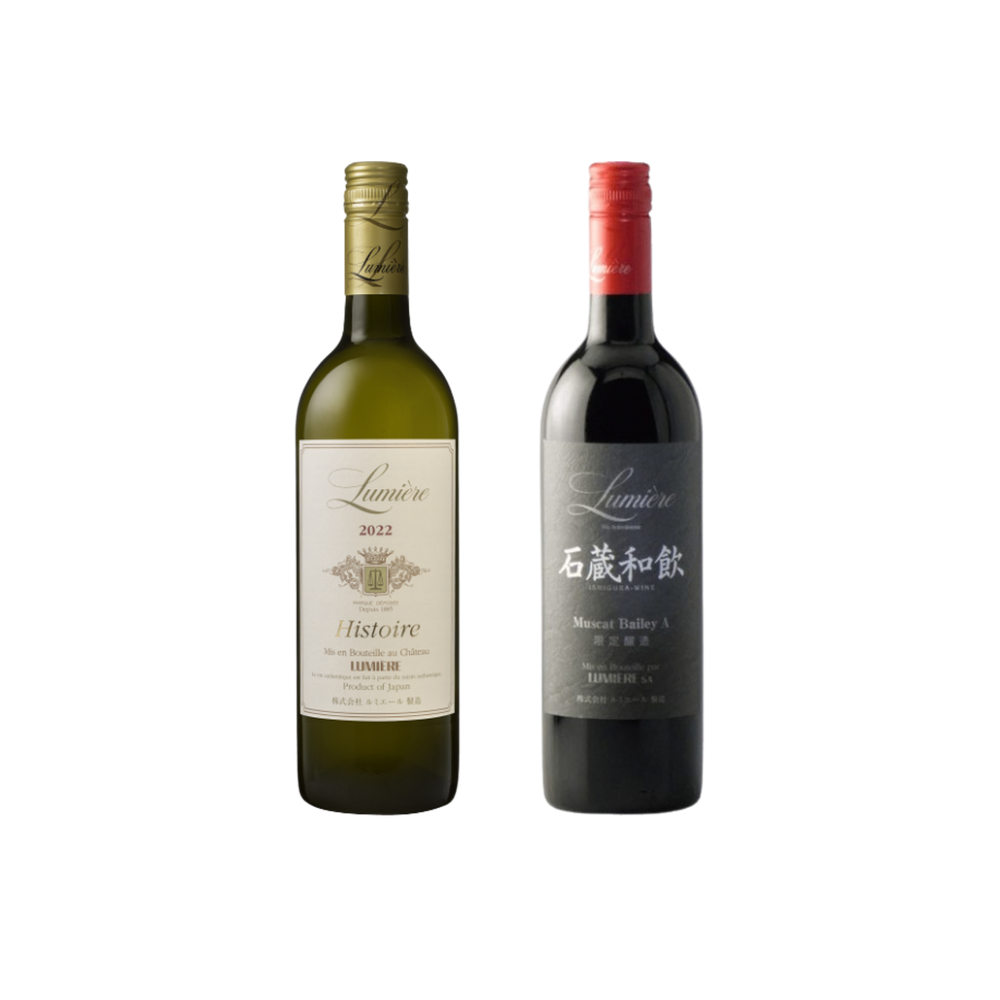
Muscat Bailey A resulted from a 1927 cross of Bailey as the female parent and Muscat Hamburg as the male parent. Bailey is an American-derived hybrid variety; Muscat Hamburg belongs to Vitis vinifera. Muscat Bailey A is consequently a deliberately bred Japanese variety with interspecific ancestry, rather than an ancient native wild vine.
Iwanohara describes the variety as relatively disease-resistant and productive. Kawakami distributed young vines to other growers, extending his work beyond his own estate. Black Queen is another variety he created. These names reflect a practical question that still helps explain Japanese winegrowing: which vine can reliably produce healthy grapes in a particular place? The answer may be an old regional variety, a deliberate cross or an international variety grown in a suitable way.
From wild vines to international varieties
Other names represent deliberate crosses. Muscat Bailey A and Black Queen originated in the breeding work at Iwanohara: both have Bailey as their mother, but different fathers. Yama Sauvignon resulted from Japanese yama-budō and Cabernet Sauvignon. Yamasachi, in turn, has Kiyomi and yama-budō as its parents. Similar names should not obscure these distinct pedigrees.
International varieties add to this range. Château Mercian lists Cabernet Sauvignon, Merlot and Cabernet Franc among the varieties at Jyonohira in Yamanashi. Research in Hokkaidō documents Pinot Noir and also describes trials or cultivation initiatives with Chardonnay, Sauvignon Blanc and Merlot. Such examples answer the question of what is grown in particular places. They do not establish a single “Japanese flavour” for these varieties.
| Variety | Verified reference point | How to read this |
|---|---|---|
| Koshu | Grey-pink berries, relatively thick skins and vigorous growth. | Look closely at training systems and skin contact. |
| Muscat Bailey A | Bailey × Muscat Hamburg (1927); Iwanohara describes it as disease-tolerant and productive. | A distinct variety; hardiness does not mean immunity. |
| Black Queen | Bailey × Golden Queen; a cross from 1927. | Iwanohara describes thick, dark skins and pronounced acidity. |
| Yama Sauvignon | Yama-budō × Cabernet Sauvignon. | A distinct cross; not to be confused with Yamasachi. |
| Yamasachi | Kiyomi × Yama-budō. | Bred in Ikeda in response to the limits imposed by winter. |
| Pinot Noir | NARO notes susceptibility to disease in hot, humid conditions. | Site suitability and vine health remain central questions. |
Sources & further reading · Japanese original sources
- エヌリブ27号「『甲州』ブドウのルーツ」 — 酒類総合研究所
- “ワイン県やまなし”日本ワイン発祥の地 — 山梨県
- 葡萄園について — 岩の原葡萄園
- 善兵衛のぶどう — 岩の原葡萄園
- お酒のはなし ワイン2(日本ワイン) — 酒類総合研究所
- Kōfu City, interview with the Wine Science Research Center · 山梨大学ワイン科学研究センターインタビュー
- 池田町ブドウ・ブドウ酒研究所(TOKACHI WINE) · 山幸
- シャトー・メルシャン · 産地について
- 農研機構(NARO) · (研究成果)気候変動により、北海道の代表的産地で高級ワイン用ブドウ「ピノ・ノワール」が栽培可能に
