 A new perspective on wine.
 Meet the people behind the wines.
 Japan, beyond the familiar.


03 · Winegrowing in Japan
One country. Many worlds of wine.
Hokkaidō: sea proximity, snow and growing varietal diversity
Yoichi sits on the Sea of Japan in southwestern Hokkaidō. It opens towards the water to the north, with hills surrounding it on the other sides. Local producer Yoichi Wine describes the influence of the warm Tsushima Current and a climate that is comparatively mild within Hokkaidō. That qualification matters: a mild winter by Hokkaidō standards need not feel mild to a visitor from central Europe. The sea and the sheltered topography help distinguish Yoichi from more inland sites. Its longstanding fruit-growing tradition also provides a practical foundation for today’s wine industry.
Kerner, Bacchus and Zweigelt are part of the island’s wine-growing history. In an interview published by the national climate adaptation platform A-PLAT, winemaker Kiichirō Ochi describes how Pinot Noir and Chardonnay can now also ripen well in Yoichi. This is the observation of a particular grower. Research by Japan’s National Agriculture and Food Research Organization, NARO, supports the broader trend: temperatures have become more suitable for European wine grapes in important growing areas. Its maps of future suitability nevertheless depend on climate models and specified temperature and rainfall thresholds. They do not promise that every plot will be commercially viable. Nor do they make the older grape varieties obsolete: suitability still has to be assessed at the individual site.
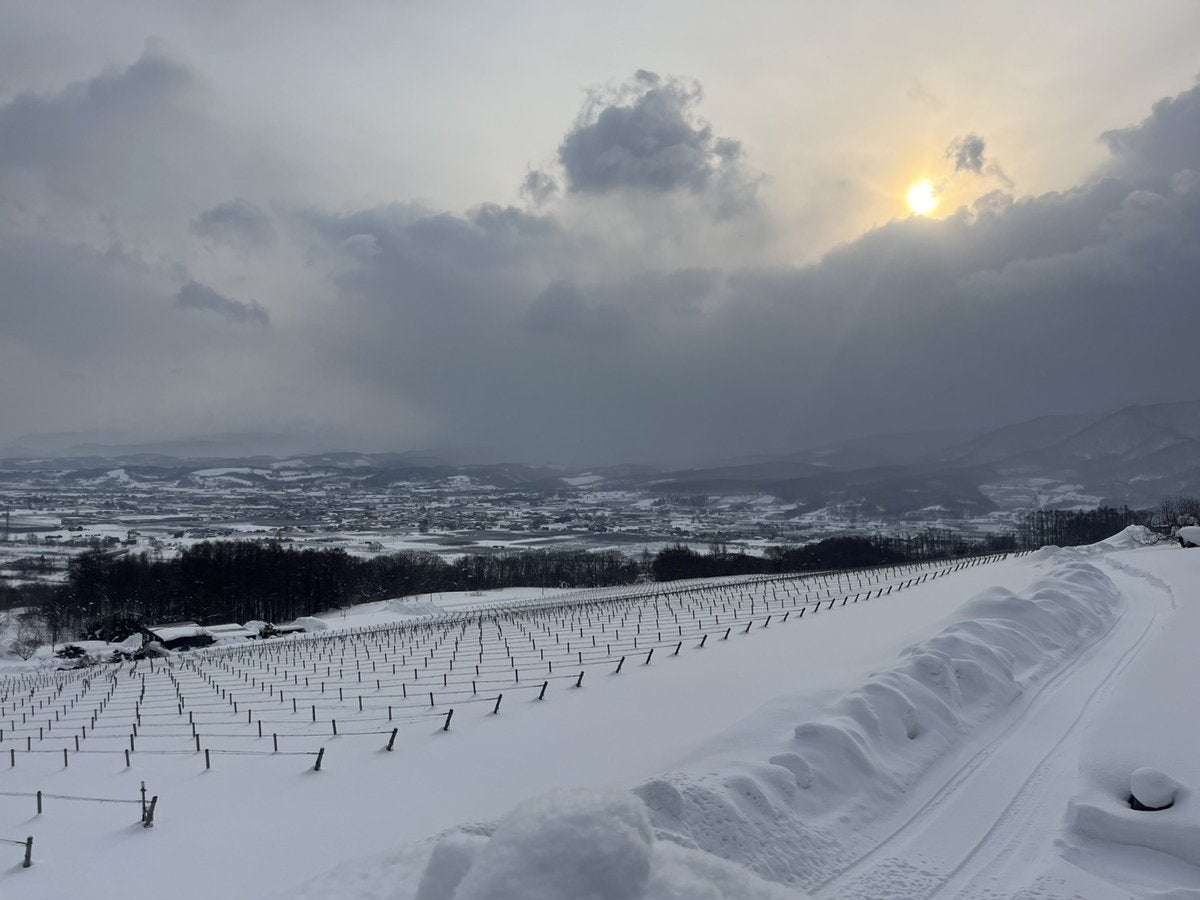
Further east, Sorachi offers a different perspective on northern viticulture. In Mikasa, Takizawa farms south-facing slopes planted with Pinot Noir, Sauvignon Blanc, Chardonnay and Auxerrois. The winery explicitly describes winter snow cover as protection against severe cold. Snow is therefore both an ally and a source of work. Hamada Vineyard’s winter diary shows how much strain it can put on vineyard structures: in January 2021, wires had to be released from their posts because the weight of snow was deforming the trellis. This was a documented event, not a snow-depth figure that applies every year. It makes clear why wine growing in northern Japan requires particular manual work outside the growing season too.
Comparisons between Sorachi and Shiribeshi also require care. In 2022, the Hokkaidō research institute studied Zweigelt and Chardonnay, selecting two vineyards in Sorachi and one in Shiribeshi for each variety. The Sorachi vineyards studied had lighter bunches and lower yields per vine. Sugar levels differed between growers; one Chardonnay lot was specifically harvested for sparkling wine. These results apply to the vineyards and year studied. Alongside location, cultivation, disease pressure and the intended harvest style must also be considered.
Yamanashi: Kōshū tradition and great diversity within the basin
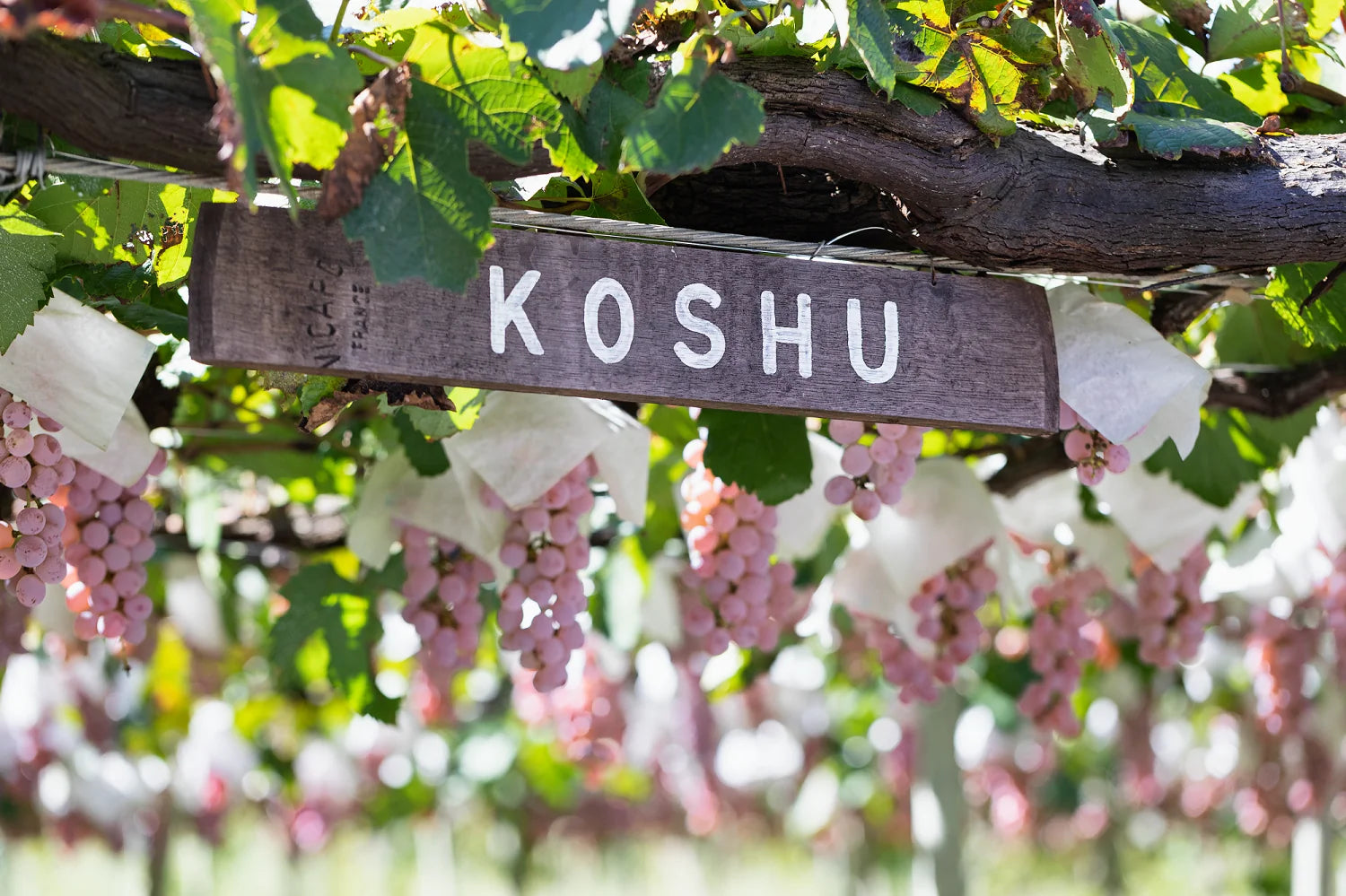
Much of Yamanashi’s wine growing is concentrated in and around the Kōfu Basin. The prefecture highlights long sunshine hours, relatively low rainfall and well-drained sites. “Relatively dry” needs to be understood in a Japanese context. The traditional Kōshū pergola was itself developed as an adaptation to a rainy country. In the Kyōtō region—meaning the eastern Kōfu Basin, not the city of Kyoto—widely spaced, large vines form part of a fruit-growing system developed over generations. Its recognition as agricultural heritage celebrates the relationship between landscape, knowledge and land use. The pergola is therefore more than an attractive historical feature: it is part of the region’s agricultural technology.
Yamanashi is not a uniform valley floor either. Château Mercian records elevations of approximately 340 metres at Kamoidera and 800–850 metres at Tengusawa. Gravel, sand and clay soils, slope and aspect also vary. These details explain why growers try new varieties and training systems more effectively than a broad prefectural portrait can. The two elevation figures refer to particular vineyards. They neither define Yamanashi’s entire altitude range nor establish a ranking of quality. A higher site offers different conditions; height alone is no seal of excellence.
Kōshū and Muscat Bailey A remain useful points of reference. Yet the prefecture’s own account describes varied expressions, including skin-fermented orange wine from Kōshū and red, rosé and sparkling wines from Muscat Bailey A. Origin alone therefore does not determine body, sweetness or tannin. To understand a bottle, consider its winemaking and wine style as well as its grape variety. Longer skin contact or ageing in oak can change its expression as clearly as the place where its grapes were grown.
Nagano: altitude, inland climate and several wine valleys
Nagano adds another dimension: a broad inland landscape with several growing areas. Its official wine platform describes comparatively low rainfall, plentiful sunshine and pronounced differences between day and night temperatures. In Kikyōgahara near Shiojiri, gravel layers beneath volcanic surface soils contribute to drainage. The area combines a history of Niagara and Concord with longstanding work on Merlot. This transition matters. The present importance of European varieties emerged through repeated trials and growers’ knowledge as well as favourable climatic conditions.
The Chikumagawa Wine Valley grows Merlot, Chardonnay, Cabernet Sauvignon and Pinot Noir, among other varieties. Elevation becomes more tangible at Château Mercian’s Mariko Vineyard, which sits at about 650 metres on gravel-bearing clay soil. Such details help correct the idea of Nagano as uniformly cool. Higher vineyards can still experience warm summer days. The more useful question is how warmth, cooler nights, rainfall patterns and the ripening period interact at a particular site. Merlot from Shiojiri and Chardonnay from a different valley slope should therefore be approached first as individual wines.
The search for cooler sites also has limits. Nagano’s wine-grape growing network explicitly discusses the risk of winter freeze damage to vine wood, which can increase at higher elevations. Its account of a study visit to Hokkaidō shows how Japanese regions learn from one another. “Higher” and “further north” thus describe a balance between desired ripeness, acid retention and successful overwintering. They do not indicate a simple direction in which quality inevitably improves.
Yamagata: snowy winters and varied basin locations
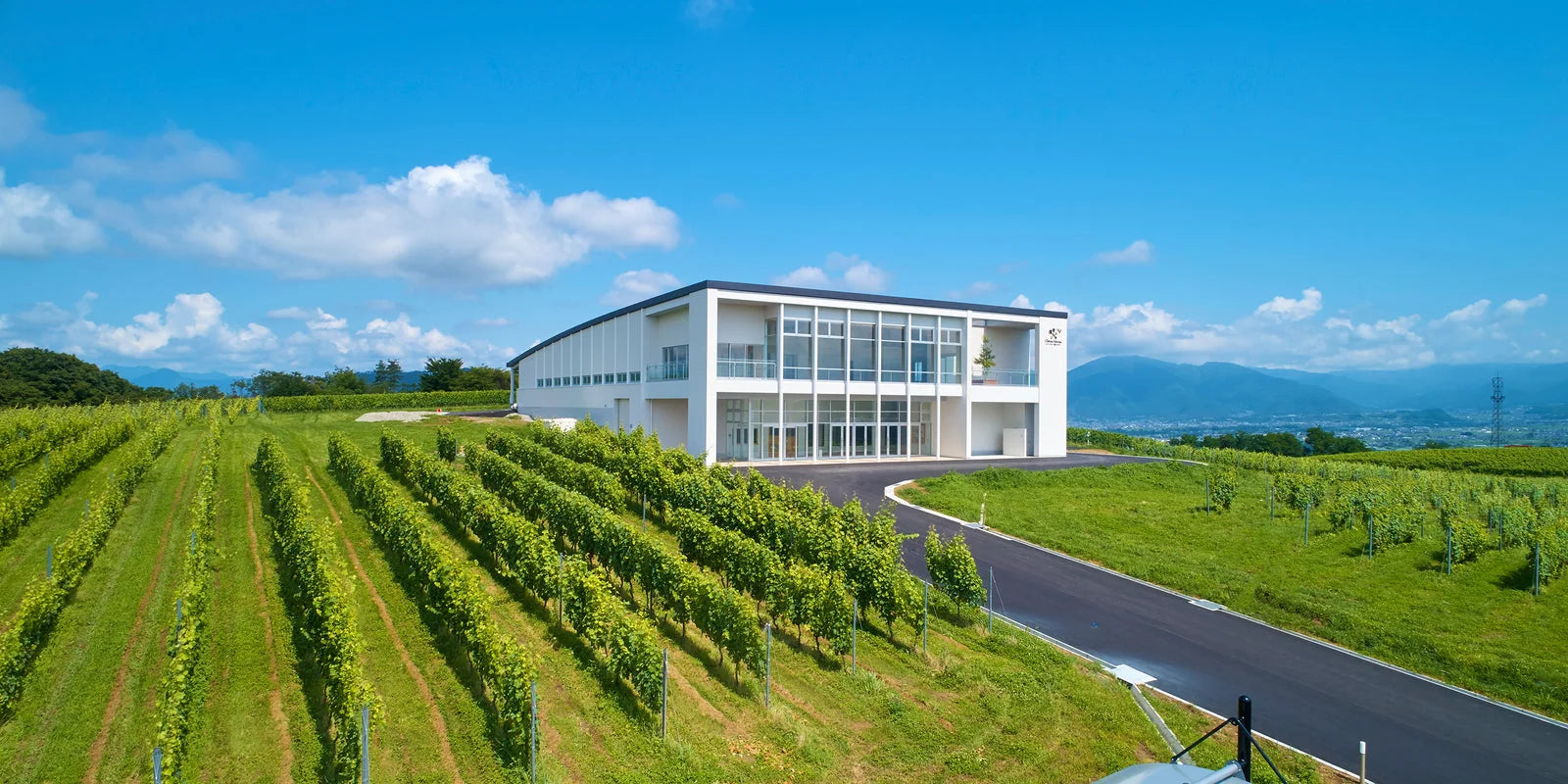
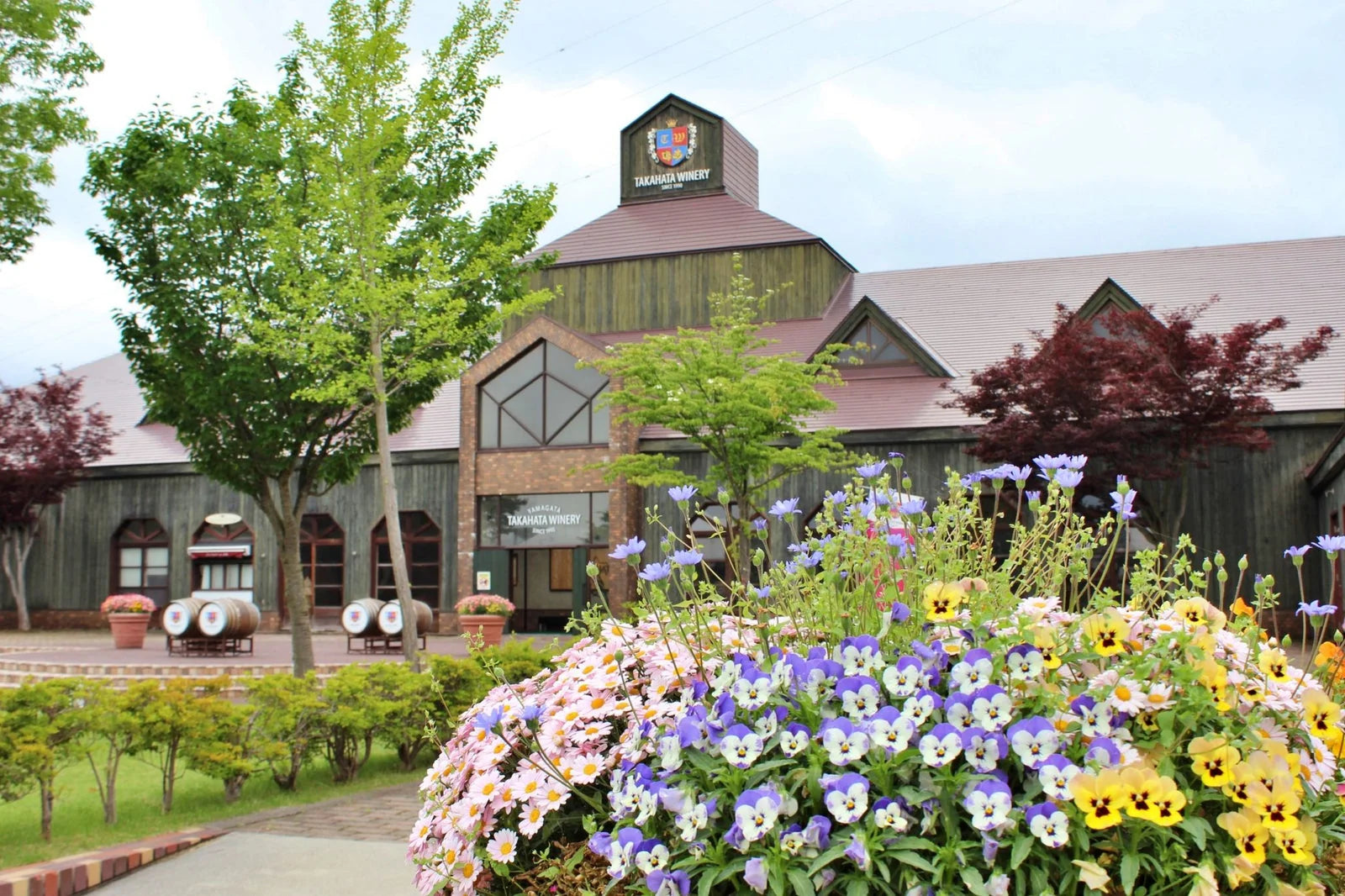
Yamagata in northern Honshū deserves a chapter of its own. Takahata lies in a mountain-enclosed basin in the Okitama region. The local winery describes snowy winters alongside very different conditions during the grape-growing season. It gives rainfall of approximately 812 millimetres from April to October, based on 1991–2020 weather data. This seasonal total should not be confused with annual figures for other places. The distinction is particularly useful in viticulture: heavy winter snowfall does not automatically mean equally heavy rain during flowering and ripening.
The producer distinguishes four growing areas within Takahata. Kameoka lies at about 220 metres and supplies the earliest Chardonnay harvest among its growing areas. Wada ranges from roughly 250 to 400 metres, with larger day–night temperature differences and more winter snow. Conditions in Yashiro and Takahata itself vary between the plains and sites closer to the mountains. Alongside Chardonnay and Merlot, the grape selection includes Muscat Bailey A, Pinot Blanc and other varieties. The winery draws on experience with Delaware table grapes: open-sided rain shelters are combined with pergola training, while uncovered trellised vineyards also exist. This coexistence demonstrates an adaptable approach. One training system does not automatically signify fine wine, nor another mass production.
Western Honshū: Hiroshima stretches from the Inland Sea into the hills
Hiroshima should not be reduced to its warm coastline. Miyoshi lies inland, where three rivers meet in a basin. In an interview with a grape grower, the local tourism authority describes the area’s misty landscape. Hiroshima Miyoshi Winery provides a particularly useful account of actual vineyard practice. Its own vineyards grow European varieties including Syrah, Merlot and Pinot Noir on trellises, while contract growers cultivate varieties including Chardonnay and Shōkōshi under traditional pergolas. The winery also explains how it limits bunch numbers and varies harvest timing to suit the intended wine. Within a single place of origin, different varieties and growing methods therefore coexist, with growers adapting their work to the result they want to achieve.
Shikoku: Kagawa and breeding’s answer to summer heat
On the northern side of Shikoku, Kagawa shares the comparatively dry climate of the Seto Inland Sea. The prefecture reports annual rainfall of about 1,150 millimetres at the Takamatsu weather station, concentrated in the rainy and typhoon seasons. This distinguishes this part of southern Japan from much wetter sections of the Pacific coast. The station figure offers regional context; it is not a measurement from every vineyard. The annual total is only part of the story. When a substantial share of rain arrives during sensitive stages of growth, managing moisture remains an immediate concern.
Kagawa’s distinctive contributions include the grape Kadai-noh R-1. Kagawa University developed it from Ryūkyū Ganebu, a wild vine native to southern Japan, and Muscat of Alexandria. One aim was good berry colour at high temperatures, as colour development in southwestern Japanese vineyards can coincide with the height of summer. Sanuki Winery makes wine from this variety grown in Kagawa. Here, regional identity takes a particularly tangible form: it also emerges when researchers and producers develop and test a suitable vine. Alongside choosing existing varieties, breeding new grapes is one of the ways Japanese wine growing adapts to its particular sites.
Kyūshū: Tsuno and Ajimu show two different southern paths
Tsuno in Miyazaki represents wine growing under exceptionally rainy conditions. The winery’s account of its environment describes heavy rain and typhoon damage extending into harvest time. It lists drainage, planted windbreaks, plastic tunnels and adapted pergolas among the responses. Locally established Campbell Early, Muscat Bailey A and Delaware are part of this history. European varieties also entered its own vineyards from the 1990s onwards. The essential lesson lies in the practical measures: warmth alone does not bring healthy grapes to ripeness. Wind, water and the condition of the berries must also be managed through to harvest.
On the Makiuchi Plateau, at around 150 metres, Tsuno grows Chardonnay and Syrah among other grapes and experiments with additional varieties. Its account of cultivation emphasises soil structure and root development in the local volcanic soils. These experiences are more informative than the familiar assertion that vines should always grow on the poorest possible land. A clear explanation of origin should nevertheless keep the distinction: documented work on volcanic soil does not promise a particular “volcanic” flavour in the finished wine.
Ajimu in Ōita is also on Kyūshū, but its starting conditions are different. The winery describes a misty basin with marked temperature differences and the comparatively dry influence of the Seto Inland Sea climate. Securing agricultural water supplies was itself part of the development of local farming. This challenges any equation of “Kyūshū” with Tsuno’s rainfall. Sharing an island still says little about the amount of water reaching a vineyard or how quickly it drains away.
Ajimu nevertheless uses rain covers and underground drainage in its three described vineyard sites. Relative dryness and active rain protection are entirely compatible. Its documented range includes Chardonnay, Albariño, Petit Manseng and Pinot Noir. For two Albariño wines from the 2023 vintage, the winery even specifies different slope directions and elevations: Shimoge is approximately 170–178 metres above sea level, and Ōmio 216–233 metres. Such details create a more useful comparison than a broad opposition between northern and southern wine: the same variety and producer, but different plots. Only the actual bottles reveal how strongly those differences emerge under the conditions of that vintage.
The differences at a glance
| Region / reference location | Defining differences | Examples of grapes and work in the vineyard |
|---|---|---|
| Hokkaidō: Yoichi | Sea of Japan; mild by island standards; fruit-growing tradition | Kerner, Bacchus, Zweigelt; now also Pinot Noir and Chardonnay |
| Hokkaidō: Sorachi / Mikasa | Inland slopes; snow cover protects and puts strain on structures | Pinot Noir, Sauvignon Blanc, Chardonnay, Auxerrois; winter trellis work |
| Honshū: Yamanashi | Kōfu Basin and higher slopes; many local soils | Kōshū, Muscat Bailey A; traditional pergola alongside trellis |
| Honshū: Nagano | Several valleys; inland climate; high sites requiring frost assessment | Merlot and Chardonnay; Niagara/Concord in Kikyōgahara; other European varieties |
| Honshū: Yamagata / Takahata | Snowy winters; four subregions, around 220–400 m | Chardonnay, Merlot, Muscat Bailey A; open-sided rain shelters and open vineyards |
| Western Honshū: Miyoshi | Inland basin; river landscape and fog | Syrah, Merlot, Pinot Noir, Chardonnay; trellis and pergola |
| Shikoku: Kagawa | Seto Inland Sea climate; relatively low rainfall, summer heat | Kadai-noh R-1; bred for better colour development in heat |
| Kyūshū: Tsuno | Rainy Pacific side; typhoons | Campbell Early, Chardonnay, Syrah; drainage, wind and rain protection |
| Kyūshū: Ajimu | Basin influenced by Setouchi; differences between individual plots | Chardonnay, Albariño, Petit Manseng, Pinot Noir; rain shelter and drainage |
Sources & further reading · Japanese original sources
- 余市ワインについて — 日本清酒・余市ワイン
- 気候変動によるワイン用ぶどう栽培とワイナリーの変化 — 国立環境研究所 A-PLAT
- 北海道内の醸造用ブドウ栽培適域の将来予測 — 農研機構
- 私たちのこと、畑、ワイナリー… — TAKIZAWA WINERY
- 菜園日誌 210109 ブドウ垣根の番線はずし — Hamada Vineyard
- 令和4年度「空知産ワイン」産地特性把握調査事業 調査報告書 — 道総研中央農業試験場 / 空知総合振興局
- KOSHU PRIDE/さらに飛躍する甲州ワイン — 山梨県
- 世界農業遺産「峡東地域の果樹農業システム」 — 山梨県
- 産地について — シャトー・メルシャン
- 高品質なぶどう — NAGANO WINE/長野県
- 桔梗ヶ原ワインバレー — NAGANO WINE/長野県
- 千曲川ワインバレー — NAGANO WINE/長野県
- 北海道における樹体凍害対策を学んできました — 長野県ワイン用ぶどう栽培情報ネットワーク
- 高畠ワイナリーについて — 高畠ワイナリー
- 4つの産地でぶどう栽培/ヴィンヤードについて — 高畠ワイナリー
- 【三次市東酒屋町】三次ピオーネ生産組合 — 三次観光推進機構
- ゆたかな味のワイン — 広島三次ワイナリー
- 地勢と気候 — 香川県
- 香大農R-1 — 香川大学農学部附属農場
- さぬきワイナリー — さぬきワイナリー
- Research Outcomes — 香川大学農学部(englische Fassung)
- 自然条件との戦い — 都農ワイン
- 独自栽培と醸造方法 — 都農ワイン
- 概要・沿革 — 安心院葡萄酒工房
- 畑への取り組み — 安心院葡萄酒工房
- 安心院ワイン アルバリーニョ、プティ・マンサン新発売のお知らせ — 安心院葡萄酒工房
